
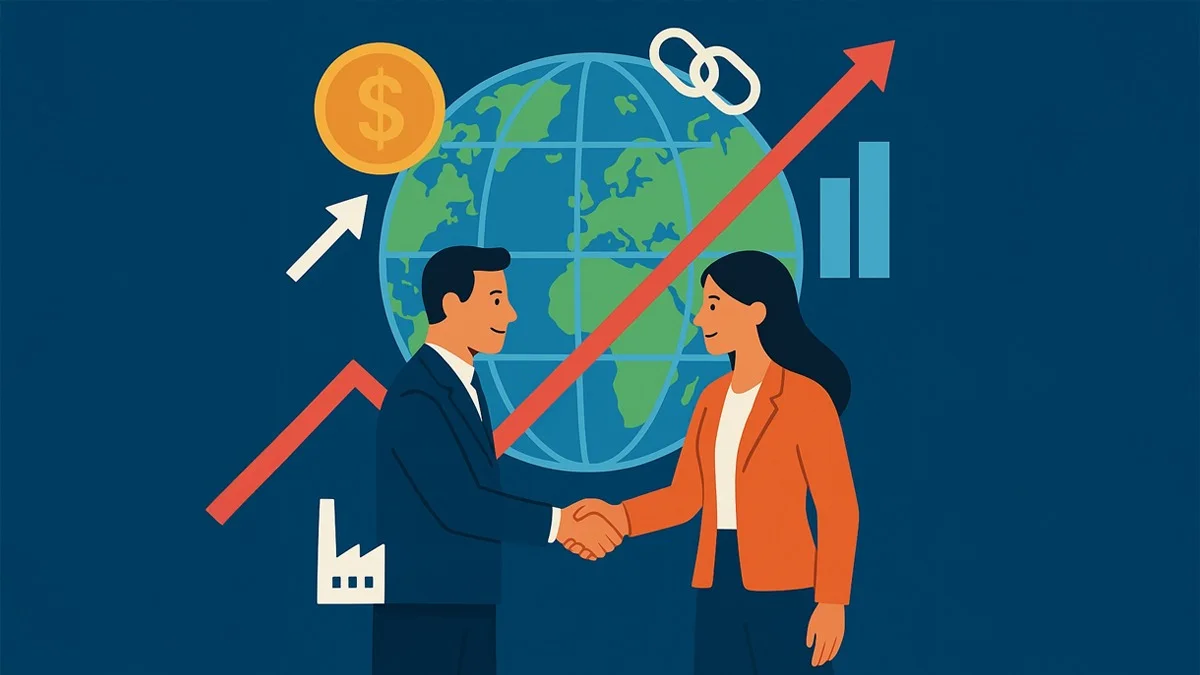
In today’s hyper-competitive global marketplace, no brand can grow in isolation. International expansion requires more than just strong products or services it requires access to new markets, networks, and customer bases. This is why strategic partnerships have become one of the most powerful growth levers for brands aiming to scale beyond their home country.
Whether you are a tech startup, a consumer brand, or a Web3 business, building the right alliances can unlock opportunities that traditional marketing or organic expansion cannot achieve alone. In fact, research shows that companies leveraging partnerships grow 2–3 times faster than those relying solely on direct sales and marketing.
So how exactly do strategic partnerships fuel international brand growth? Let’s break it down.
What Are Strategic Partnerships?
A strategic partnership is a mutually beneficial agreement between two or more businesses that combine resources, expertise, or market access to achieve shared goals. Unlike simple vendor-client relationships, partnerships are built on collaboration and long-term value creation.
Examples of strategic partnerships include:
- Co-branding initiatives (Nike x Apple with the Nike+ app)
- Distribution alliances (Starbucks partnering with PepsiCo to distribute ready-to-drink beverages worldwide)
- Technology integrations (Spotify + Uber allowing riders to play their playlists during trips)
- Cross-industry collaborations (banks partnering with fintech startups for mobile payments)
The common thread? Each partner gains access to something they cannot achieve as effectively alone.
Benefits of Strategic Partnerships for International Brand Growth
When entering new geographies, brands face barriers local competition, cultural differences, regulatory challenges, and lack of brand awareness. Partnerships help break these barriers.
Here’s how:
-
Market Access Without Heavy Investment
Setting up in a foreign market can be costly offices, logistics, marketing, legal compliance. A partnership with a local distributor, platform, or influencer network gives your brand instant access to customers without the upfront burden.
Example: Many D2C brands entering India partner with Flipkart or Amazon India instead of building their own distribution network from scratch.
-
Shared Resources & Expertise
Partnerships let companies combine strengths one brings technology, the other brings market knowledge. Together, they create a stronger offering.
Example: Global software companies often partner with Indian IT service providers to deliver customized local solutions.
-
Boosted Brand Credibility
When an unknown international brand partners with a trusted local name, credibility skyrockets. Customers are far more likely to try a new product if it’s endorsed or distributed by a company they already trust.
Example: When IKEA entered India, it partnered with local suppliers and logistics providers, ensuring smoother operations and building consumer confidence.
-
Faster Scaling with Reduced Risk
Instead of building everything in-house, brands can test waters in a new market through partnerships. If successful, they can scale up. If not, financial and reputational risks are minimized.
Example: Streaming platforms like Netflix partner with telecom operators globally to offer bundled subscriptions, reducing customer acquisition costs.
-
Innovation & Competitive Advantage
Cross-industry partnerships foster innovation. Two companies with different strengths can co-create unique offerings that competitors can’t easily replicate.
Example: Apple Watch partnerships with healthcare institutions expanded its positioning from a tech gadget to a health and wellness companion.
Types of Strategic Partnerships That Drive Global Growth
Not all partnerships are created equal. Here are some formats international brands can leverage:
- Distribution Partnerships – Expand reach through local distributors, retailers, or e-commerce platforms.
- Technology Partnerships – Integrate or co-develop products with complementary tech providers.
- Co-Branding & Marketing Alliances – Share campaigns, events, or products for wider exposure.
- Joint Ventures – Create a new entity with shared ownership to operate in a target market.
- Influencer & Media Partnerships – Collaborate with local influencers or media outlets for credibility and awareness.
- Knowledge & Training Partnerships – Partner with universities, accelerators, or industry groups to build trust and local expertise.
Why India is a Strategic Hub for Global Partnerships
For international brands, India represents one of the fastest-growing consumer and digital markets in the world. With over 1.4 billion people, rising disposable incomes, and a digital-first population, India is fertile ground for expansion.
But entering India without a local partner is challenging due to:
- Diverse cultural and regional differences
- Complex regulatory environment
- Highly competitive marketplace
That’s why global companies from tech giants to gaming platforms choose partnership-based models to succeed in India.
For instance:
- Global fintech brands partner with Indian payment gateways for compliance and reach.
- iGaming firms collaborate with local media and tech support providers for customer acquisition.
- Consumer brands tie up with Indian influencers and retail chains for trust and visibility.
By aligning with local partners, international companies accelerate entry and reduce friction.
Key Points to Convince International Clients to Partner
If you’re a business (like ABC World Media) helping international brands expand, here’s what to highlight when pitching partnerships:
- Market Expertise – “We understand the cultural, legal, and consumer nuances of India and global markets.”
- Cost Efficiency – “Partnerships reduce setup costs and maximize ROI.”
- Scalability – “Start small and expand quickly through established networks.”
- Brand Positioning – “Partnering with us enhances your credibility and visibility instantly.”
- End-to-End Support – “From media outreach to back-office operations, we handle it all.”
The Future of International Brand Partnerships
The rise of digital ecosystems, Web3 platforms, and borderless commerce means partnerships will only grow in importance. No single company can dominate globally on its own collaboration is the currency of growth.
Future trends include:
- Tech + Lifestyle partnerships (AI + fashion, Blockchain + art)
- Sustainability-driven alliances (brands teaming up for ESG initiatives)
- Cross-border digital media collaborations (joint campaigns targeting global Gen Z and millennials)
For ambitious brands, the question is no longer “Should we partner?” but “Who should we partner with to grow faster?”
Conclusion
Strategic partnerships are the backbone of international brand growth. They enable companies to enter new markets, share resources, build credibility, reduce risks, and accelerate innovation.
For global brands eyeing expansion in emerging markets like India—or Indian companies looking outward partnerships are not just optional, they are essential.
At ABC World Media, we specialize in helping brands create high-impact partnerships across media, technology, and global markets. Whether it’s digital PR, influencer collaborations, back-office scaling, or cross-industry alliances, we ensure your brand not only enters new markets but thrives in them.
Ready to scale globally through partnerships? Let’s start building alliances that drive exponential growth.

86 Comments
https://shorturl.fm/h6sEe
https://shorturl.fm/Tqwue
https://shorturl.fm/E4wc9
https://shorturl.fm/lAaBG
https://shorturl.fm/Skhap
https://shorturl.fm/LpH9i
https://shorturl.fm/ZgtC8
https://shorturl.fm/VFzPr
https://shorturl.fm/TSkcl
https://shorturl.fm/3Igqj
https://shorturl.fm/rTtRi
https://shorturl.fm/sRQpa
https://shorturl.fm/HHjLx
https://shorturl.fm/V5M9c
https://shorturl.fm/2NQpN
https://shorturl.fm/ljwEk
https://shorturl.fm/CuZvy
https://shorturl.fm/WMdzF
https://shorturl.fm/LoK8T
https://shorturl.fm/psMbk
https://shorturl.fm/cfpgC
https://shorturl.fm/C3alt
https://shorturl.fm/388BM
https://shorturl.fm/trLMp
https://shorturl.fm/m64Le
https://shorturl.fm/twXF5
https://shorturl.fm/D5CbR
https://shorturl.fm/6hCsr
https://shorturl.fm/BoMdE
https://shorturl.fm/XJnRs
https://shorturl.fm/PGOCD
https://shorturl.fm/rk9Vv
https://shorturl.fm/bOIca
https://shorturl.fm/uY1vc
https://shorturl.fm/pDqrn
https://shorturl.fm/slxRy
https://shorturl.fm/8hmTC
https://shorturl.fm/ZXQls
Enter your invite code to earn your airdrop on Aster https://is.gd/ZceEI6
Earn your airdrop on Aster https://is.gd/ZceEI6
Fast indexing of website pages and backlinks on Google https://is.gd/r7kPlC
Monetize your audience with our high-converting offers—apply today!
Share our link, earn real money—signup for our affiliate program!
Join our affiliate program and start earning today—sign up now!
Promote our products and earn real money—apply today!
Tap into unlimited earnings—sign up for our affiliate program!
Share your link, earn rewards—sign up for our affiliate program!
Grow your income stream—apply to our affiliate program today!
Your influence, your income—join our affiliate network today!
Partner with us and enjoy recurring commission payouts!
Monetize your traffic instantly—enroll in our affiliate network!
Share your unique link and earn up to 40% commission!
Share our link, earn real money—signup for our affiliate program!
Share your link, earn rewards—sign up for our affiliate program!
Grow your income stream—apply to our affiliate program today!
Get rewarded for every recommendation—join our affiliate network!
Refer friends, earn cash—sign up now!
Earn recurring commissions with each referral—enroll today!
Earn big by sharing our offers—become an affiliate today!
Partner with us and earn recurring commissions—join the affiliate program!
Join our affiliate program and start earning commissions today—sign up now!
Drive sales, collect commissions—join our affiliate team!
Start earning every time someone clicks—join now!
777sambaslots gives me that old-school Vegas vibe from my couch. The slots are fun, and I had a decent win last week. Could use a few more payment options, but overall, it’s solid: 777sambaslots
Metboxcasino is pretty slick. Good selection of games and the bonuses actually seem worth claiming. Withdrawal took a day or so, which is fine by me. Worth a look if you’re tired of the same old stuff: metboxcasino
Ganabetsportium is my sports betting secret weapon. The odds are competitive, and they have a crazy amount of sports to bet on. I even made a few bucks on some obscure European soccer league. Seriously, try it: ganabetsportium
Monetize your audience with our high-converting offers—apply today!
Earn passive income with every click—sign up today!
Monetize your audience—become an affiliate partner now!
Drive sales, collect commissions—join our affiliate team!
Refer customers, collect commissions—join our affiliate program!
Partner with us and enjoy high payouts—apply now!
Apply now and unlock exclusive affiliate rewards!
Share our products and watch your earnings grow—join our affiliate program!
Turn your network into income—apply to our affiliate program!
Share our offers and watch your wallet grow—become an affiliate!
Partner with us and earn recurring commissions—join the affiliate program!
Maximize your earnings with top-tier offers—apply now!
Grow your income stream—apply to our affiliate program today!
Refer customers, collect commissions—join our affiliate program!
Refer friends, earn cash—sign up now!
Tap into a new revenue stream—become an affiliate partner!
Start sharing, start earning—become our affiliate today!
Become our partner and turn clicks into cash—join the affiliate program today!
Share our products, reap the rewards—apply to our affiliate program!
Share our products, reap the rewards—apply to our affiliate program!